
Graduating from an American Ivy League university with a Master’s degree in public policy in 2009, Brazilian architect Pedro Henrique de Cristo had one goal – to go back to his home country and use his newly gained knowledge to make things better. He had many ideas on how he could do this.
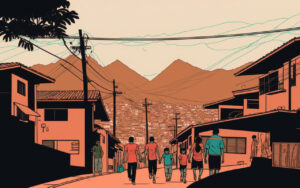
In the euphoria and dissent leading up to Brazil hosting both the FIFA World Cup and Olympics in succession, he soon found himself in Vidigal, a picturesque but troubled favela overlooking Rio’s famous Ipanema Beach. Vidigal, the greenest but also one of the toughest favelas in the city for him, presented a challenge – it was a place where Pedro could see his skills and ideas having a real impact and being transformative. He wanted to be where the action was, so he moved in.
On arrival, and not knowing exactly what he was to do there, Pedro immersed himself into the community and got to know his new neighbours. Some were suspicious.
Not long after, Pedro realised something – for a long time, Vidigal had been used as a garbage dump, destroying its beautiful natural setting and exposing its residents to an unhealthy environment. It was also under threat of gentrification from unscrupulous developers working with dodgy politicians, and as he was to learn later, some residents. “I just got deeper, and deeper into the community, like, really got engaged, not just professionally, but personally,” Pedro says. “It changed my life”, he adds.
So, together with Mauro Quintanhila, who had been working to clean the neighbourhood up with a few friends for years, Pedro went to work. Not only would they clean up Vidigal, but within years, they would transform the area’s fortunes. A successful cleanup campaign resulted in forming the largest urban park in Brazil under the stewardship of the Vidigal community, with Pedro and its pitchman and chief architect. It was a remarkable success, and all sorts of accolades followed…then, things went unexpectedly wrong. “Our crime was we did everything right, and we made lots of money for the community”, says Pedro